
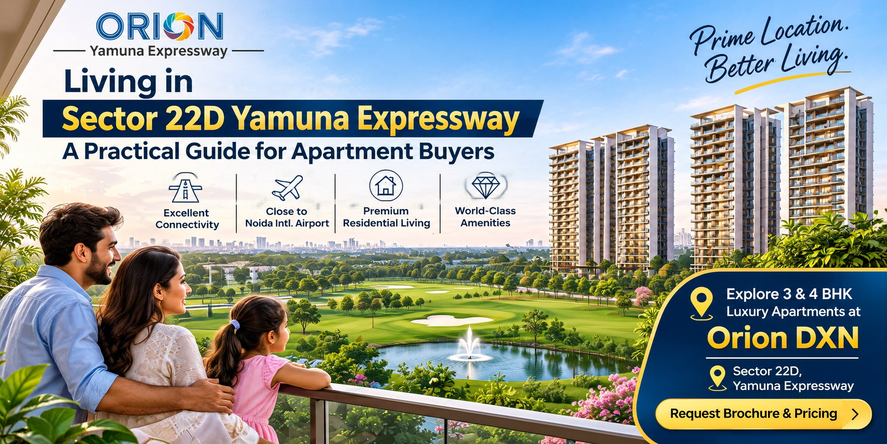
Choosing an apartment is not just about finding the right floor plan. The surrounding neighborhood can influence your daily commute, family routine, access to essential services, and overall quality of life. Sector 22D on Yamuna Expressway is attracting attention from homebuyers exploring residential opportunities in the Greater Noida region. With planned residential development, expressway connectivity, and infrastructure activity around Jewar, the sector is a location worth considering. But is Sector 22D suitable for your family? This guide explores the area’s connectivity, residential environment, everyday conveniences, and apartment options to help you make an informed property decision. Where Is Sector 22D Yamuna Expressway Located? Sector 22D is situated within the Yamuna Expressway Industrial Development Authority (YEIDA) region in Gautam Buddh Nagar, Uttar Pradesh. The sector forms part of a planned residential corridor connected to the Yamuna Expressway, which links Greater Noida with Agra. Unlike established neighbourhoods in central Noida, Sector 22D is still developing. Buyers should therefore consider both the existing facilities and future infrastructure plans before making a decision. For those searching for apartments in Sector 22D Yamuna Expressway, understanding the area’s current development stage is essential before choosing a property. Why Are Homebuyers Exploring Sector 22D? Sector 22D is attracting residential interest because of its location within the Yamuna Expressway development corridor. Several factors make the area worth exploring for apartment buyers. The Yamuna Expressway provides an important road connection between Greater Noida and Agra. Residents travelling towards Greater Noida, Noida, or Delhi can use the expressway and its connecting road networks. However, commuting convenience depends on the exact project location, expressway entry points, traffic conditions, and final destination. Buyers should check their preferred routes during normal working hours rather than relying entirely on advertised travel times. Noida International Airport at Jewar is an important infrastructure development within the wider Yamuna Expressway region. Its development has increased interest in surrounding residential and commercial locations. For homebuyers, airport connectivity may be particularly relevant if they travel frequently or work in airport-related industries. However, proximity to the airport should not be the only factor influencing a property purchase. Families should also consider schools, healthcare facilities, employment locations, and everyday commuting requirements. Sector 22D is part of YEIDA’s planned urban development area. The sector includes residential housing and group housing developments, making it relevant for buyers looking for apartment communities. Planned development can provide a framework for roads, utilities, residential zones, and supporting infrastructure. Nevertheless, buyers should verify which facilities are already operational and which are still under development. Is Sector 22D Suitable for Family Living? The answer depends on your family’s lifestyle and everyday requirements. A household with school-going children may prioritize educational institutions, healthcare access, and reliable transport facilities. Working professionals may focus on commute times, internet connectivity, and proximity to employment centers. Families with senior members may require accessible medical facilities and convenient shopping options. Before buying an apartment in Sector 22D, consider the following: • Distance to schools and healthcare facilities• Access to grocery stores and essential services• Road conditions and public transport availability• Water, electricity, and maintenance arrangements• Safety and security within the residential community• Availability of recreational spaces A developing residential location may be suitable for some households, but buyers should evaluate its current convenience rather than assuming that all planned amenities are already available. What Types of Apartments Can Buyers Explore? Homebuyers searching for flats in Sector 22D can evaluate residential developments according to their budget, family size, and lifestyle expectations. Apartment configurations may differ across projects. For families seeking spacious homes, 3 BHK apartments can provide dedicated bedrooms, comfortable living areas, and flexibility for work-from-home requirements. Larger configurations, including 4 BHK apartments, may appeal to multigenerational households or buyers who prefer additional living space. However, the number of bedrooms is only one consideration. Buyers should also compare carpet area, floor layouts, ventilation, balconies, parking arrangements, and maintenance expenses.A well-planned apartment should support everyday living without unnecessary compromises. How Important Are Residential Amenities? Amenities can influence the comfort and convenience of apartment living. Modern residential developments may include landscaped gardens, fitness centers, swimming pools, clubhouses, and children’s recreational spaces. These facilities can provide opportunities for relaxation, fitness, and community activities. However, buyers should confirm whether the advertised amenities are approved, completed, or still planned. It is also important to understand maintenance charges, access conditions, and the expected availability of these facilities. A useful amenity is one that residents can comfortably access and maintain over time. Exploring 3 and 4 BHK Apartments at Orion DXN Orion DXN is a residential development promoted in Sector 22D, Yamuna Expressway, offering luxury 3 BHK and 4 BHK apartment configurations. The project’s website highlights golf-facing residences, five residential towers, and four apartments per floor. Its advertised lifestyle features include a clubhouse, swimming pool, fitness facilities, and landscaped surroundings. These features may appeal to families looking for spacious apartments within a planned residential environment. Buyers exploring Orion DXN luxury apartments on Yamuna Expressway can request the latest floor plans and compare the available configurations according to their household requirements. Before booking, buyers should verify the project’s RERA information, approved specifications, construction status, available inventory, and complete pricing details. Explore Orion DXN Apartment Options Searching for a 3 BHK or 4 BHK apartment in Sector 22D? Explore Orion DXN’s residential configurations and request project-specific information. Get the latest brochure, available floor plans, pricing details, and site visit assistance. What Should Buyers Know About Property Prices in Sector 22D? Apartment prices can vary significantly depending on the project, configuration, floor, specifications, and construction stage. A property’s advertised base price may not represent the complete purchase cost. Buyers should request an itemised quotation covering applicable charges, parking arrangements, taxes, and other contractual expenses. Maintenance deposits and recurring charges should also be considered when evaluating affordability. Rather than choosing a property solely because of an attractive advertised rate, compare the total cost with the apartment’s usable space and available facilities. For current Orion DXN pricing, request an updated cost sheet directly from the project
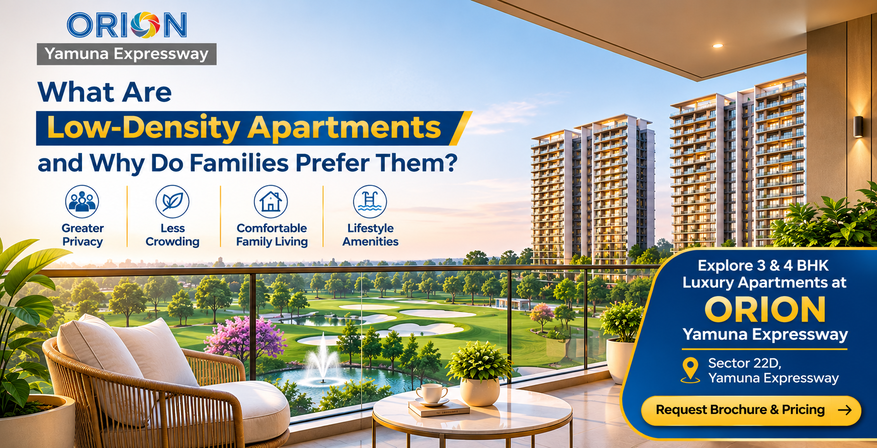
What Are Low-Density Apartments and Why Do Families Prefer Them?
When buying a new home, families usually consider factors such as location, apartment size, pricing, and available amenities. However, one important aspect that deserves equal attention is residential density. Low-density apartments are becoming an attractive option for homebuyers who value privacy, fewer immediate neighbors, and a comfortable living environment. These developments may offer a different residential experience compared to projects with a larger number of apartments and residents. For families exploring luxury apartments on Yamuna Expressway, understanding the concept of low-density living can help them choose a home that matches their lifestyle, space requirements, and long-term expectations. What Are Low-Density Apartments? Low-density apartments are homes located in residential developments that have relatively fewer residential units in proportion to the available land area compared with similar projects. In high-rise residential buildings, low density is also commonly associated with having fewer apartments on each floor. For example, a tower with four apartments per floor may provide a different living experience from a building with eight or ten apartments on each floor. However, the number of apartments per floor alone does not determine the overall density of a residential project. Other factors, such as the total number of residences, land area, number of towers, and availability of shared facilities, also play an important role. Understanding these factors gives homebuyers a clearer picture of how a residential development is planned and how it may affect everyday living. Why Do Families Prefer Low-Density Apartments? Low-density residential developments can offer several lifestyle advantages, depending on their planning, design, and management. For families looking for a more private and comfortable home environment, these benefits can be worth considering. Privacy is one of the main reasons why some homebuyers prefer low-density apartments. When fewer apartments share a floor, there may be less movement around entrances, corridors, and lift lobbies. This can create a relatively peaceful environment for residents. It can be particularly appealing to families who prefer fewer immediate neighbors and less activity outside their apartment. However, privacy also depends on factors such as apartment placement, sound insulation, building design, and the overall layout of the floor. Residential communities usually include shared facilities such as lifts, parking areas, landscaped spaces, and recreational zones. When fewer residents share these facilities, there may be less congestion during busy hours. This can make everyday activities more convenient for families. However, buyers should not judge convenience only by the number of apartments per floor. Lift capacity, total project occupancy, parking arrangements, and the availability of amenities should also be considered. A well-planned residential development should have facilities that can comfortably support the number of residents. Families need a home environment that supports different age groups and daily activities. Children may benefit from recreational and play areas, working professionals may appreciate fitness facilities, and senior residents may give more importance to accessible common spaces. A thoughtfully planned low-density development can support these different requirements while maintaining a relatively private residential atmosphere. For families, the overall living experience is not limited to the apartment itself. The planning of common areas and the availability of everyday facilities also make a difference. Some residential developments with fewer apartments per floor may offer layouts designed around spacious living areas, balconies, and practical room arrangements. A well-planned apartment can make better use of available space and provide a comfortable environment for everyday activities. Natural light and ventilation are also important considerations when selecting a home. However, these features depend on apartment orientation, window placement, surrounding buildings, and architectural design rather than residential density alone. Homebuyers should always examine approved floor plans and carpet area to understand how much usable space an apartment offers. Modern residential developments often include facilities such as clubhouses, swimming pools, gymnasiums, landscaped gardens, and recreational spaces. These amenities can improve everyday living by providing residents with opportunities for exercise, relaxation, and family activities within the residential community. However, the quality of the living experience depends on how well these facilities are planned, maintained, and managed. Before making a purchase decision, buyers should check the approved project specifications and confirm which amenities are included. Low-Density vs High-Density Apartments: What Is the Difference? Both low-density and high-density residential developments have their own advantages. The better option depends on the preferences, lifestyle, and requirements of individual homebuyers. Privacy and Living Environment Low-density apartments may offer greater privacy because fewer households share corridors and common spaces. This can create a relatively quieter residential environment. High-density developments accommodate more residents and may have a more active community atmosphere. The experience depends on the building layout, apartment positioning, sound insulation, and overall project planning. Shared Facilities In low-density developments, fewer households may share certain facilities, which can help reduce congestion in common areas. In higher-density communities, more residents may use lifts, parking areas, and recreational facilities, particularly during peak hours. However, adequate infrastructure and proper facility management can make either type of development comfortable for residents. Maintenance Costs Low-density developments may have higher maintenance expenses per household because certain common costs are shared among fewer residents. On the other hand, maintenance charges in higher-density projects may be distributed across a larger number of households. These costs depend on the project’s facilities, management arrangements, maintenance policies, and overall expenses. Buyers should compare actual maintenance charges and the facilities covered rather than assuming that one type of development will always be more affordable. Why Consider Luxury Apartments in Sector 22D, Yamuna Expressway? Sector 22D is part of the developing residential corridor along Yamuna Expressway in the Greater Noida region. Its location provides access to the Yamuna Expressway road network and places it within an area experiencing residential and infrastructure development. Homebuyers exploring luxury apartments in Sector 22D Yamuna Expressway should consider several factors before selecting a property. These include existing road connectivity, nearby facilities, apartment layouts, neighborhood development, and daily commuting requirements. It is also important to distinguish between infrastructure that is already operational and projects that are still proposed or under development. A careful evaluation of the location can help
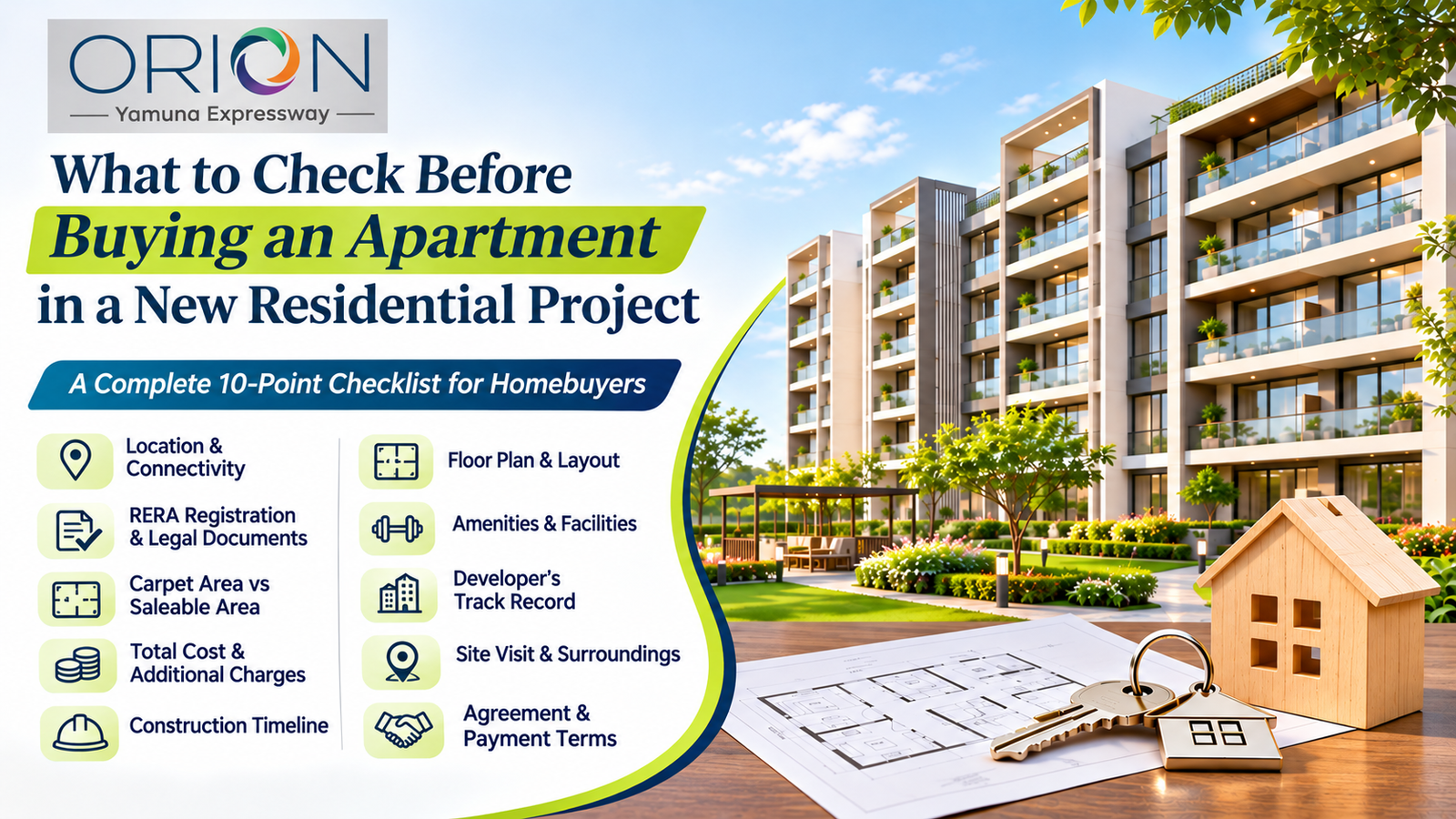
What Should You Check Before Buying an Apartment in a New Residential Project?
When it comes to buying an apartment, the price, location, and attractive property pictures are not the only things you should consider. Buyers who are planning to invest in or purchase a home need to understand the important aspects of a residential project before making a decision. New residential projects offer modern designs, lifestyle facilities, and different types of apartments. However, every project has its own specifications, payment process, construction timeline, and legal requirements. With proper planning, homebuyers can compare available options, understand potential concerns, and choose a home that matches their expectations. 1. Review the Location and Surrounding Infrastructure One of the most important things to consider when buying a residential apartment is its location. A well-connected neighborhood can make everyday living more convenient and provide easy access to essential facilities. Before making a decision, consider the distance from schools, hospitals, workplaces, shopping areas, and major roads. It is also important to check the existing infrastructure in the area rather than depending only on future development plans. For example, if a buyer is considering buying 3 BHK flats on Yamuna Expressway, they should check the existing road connectivity, nearby schools, hospitals, and other facilities. Future development plans can also be considered, but buyers should understand what is already available. Visiting the neighborhood at different times of the day can help you understand traffic conditions, accessibility, and the overall environment. 2. Check RERA Registration and Project Documentation Legal verification is an important part of the apartment-buying process. Under the Real Estate (Regulation and Development) Act, applicable residential projects are required to follow registration and disclosure requirements. Buyers should check the project details through the relevant state RERA authority. Some important details to review include For residential projects in Uttar Pradesh, buyers can check the official UP-RERA website to find relevant project information. Although RERA registration provides access to important project details, it should not replace independent legal verification. Consulting a legal professional can help buyers understand the documents and identify potential concerns. 3. Understand Carpet Area and Saleable Area First-time homebuyers may get confused by the different ways apartment sizes are presented. The carpet area of an apartment generally refers to the net usable floor area, as defined under the applicable RERA provisions. It helps buyers understand how much usable space is available inside the apartment. Saleable area is another commonly used measurement in property advertisements. Depending on the calculation method used by the developer, it may include an allocation of common areas. For example, two apartments advertised with similar saleable areas may have different usable spaces. Before making a decision, ask the developer for a complete area statement. Compare the carpet area, room dimensions, balcony area, and overall apartment layout. Understanding these measurements before purchasing can help you decide whether the available space is suitable for your family’s requirements. 4. Compare Floor Plans and Apartment Layouts A properly planned floor layout can make everyday living more comfortable and convenient. Instead of focusing only on the number of bedrooms, buyers should also check how the available space is distributed throughout the apartment. Consider the placement of bedrooms, living rooms, bathrooms, balconies, and kitchens. Natural daylight, ventilation, storage space, and privacy are also important factors. Families may prefer apartments with separate dining areas, spacious bedrooms, or an additional utility or service room. If you are considering different apartment configurations, compare multiple floor plans to understand which layout makes the best use of the available space. 5. Calculate the Total Cost of Buying an Apartment The basic selling price mentioned in a property advertisement may not always be the final amount you need to pay. Depending on the project and applicable regulations, additional expenses may include: Buyers should ask for a detailed, apartment-specific cost sheet that clearly mentions all applicable charges. It is also important to understand the payment schedule, booking conditions, cancellation terms, and financial obligations during the construction period. Comparing the complete cost of different apartments can help you avoid unexpected expenses and plan your budget more effectively. 6. Check the Amenities and Their Practical Benefits Many new residential projects offer facilities such as swimming pools, fitness centers, landscaped gardens, children’s play areas, clubhouses, and recreational spaces. These facilities can make everyday living more convenient, but buyers should check their actual specifications and how useful they will be for residents. Some important things to consider include whether the amenities are part of the approved project plans, whether additional membership charges apply, and how future maintenance expenses will be managed. Families with children may find outdoor spaces and recreational facilities particularly useful. However, buyers should not consider proposed amenities as completed facilities until their construction and operational status have been verified. 7. Evaluate the Developer and Construction Timeline Before purchasing an apartment, it is important to understand the developer’s background and ability to complete the project. Buyers should review the developer’s previous projects, experience, completed developments, and publicly available project records. If the apartment is under construction, check the registered completion date and the possession conditions mentioned in the agreement. It is also worth understanding the construction-linked payment schedule, possible delays, and the provisions available under the agreement and applicable laws if the project does not progress as expected. Do not make a purchase decision based only on promotional possession estimates. Written agreements and official project documents are more reliable sources of information. 8. Visit the Project Site Before Booking A physical visit to the residential project can provide information that may not be available in brochures or online presentations. During your visit, check the approach roads, surrounding development, site accessibility, and visible construction activities. You can also ask the project representative about tower locations, apartment orientation, parking arrangements, and planned common facilities. Before requesting detailed plans, pricing, or a site visit, buyers researching apartments in the DXN Orion Sector 22D project can start by reviewing the available apartment layouts and information in the project brochure. A site visit can help you understand the project better, but it should not
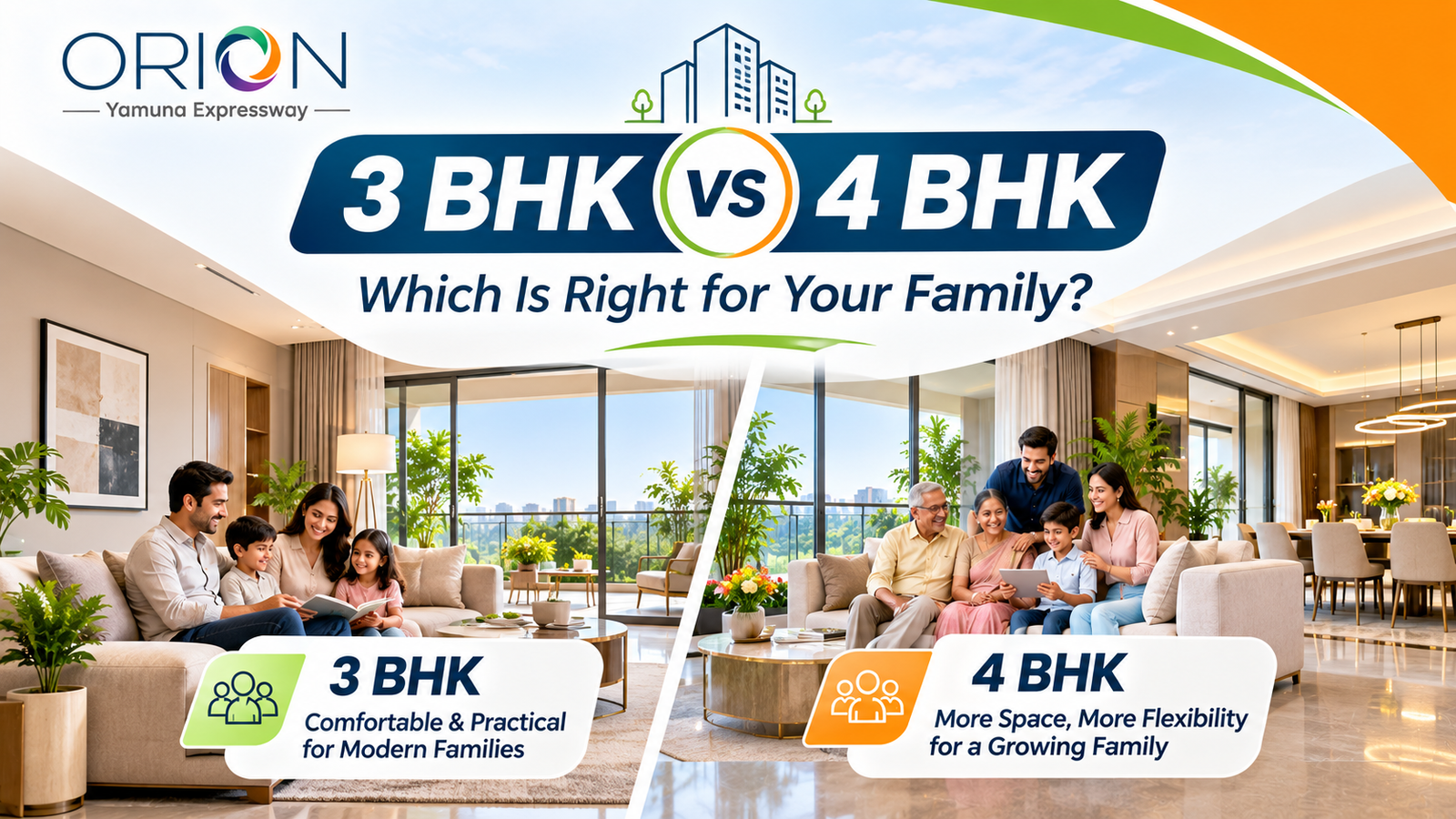
3 BHK vs 4 BHK Apartments: Which Is Better for Your Family?
When deciding between a 3 BHK and a 4 BHK apartment, one important question comes to mind: which option is better for your family? Buying an apartment is a major decision, so it is important to consider your space requirements, budget, lifestyle, and future plans. Both 3 BHK and 4 BHK apartments have their own advantages. The right choice depends on your family size, daily needs, and the kind of comfort you expect from your home. Modern families increasingly look for privacy, flexible living spaces, and rooms that can be used for different purposes, including working from home. Because of this, choosing the right apartment layout has become an important part of buying a property. A 3 BHK apartment may be suitable for a nuclear family, while a 4 BHK apartment can provide more flexibility for larger families or households with changing space requirements. Understanding the practical differences between these two configurations can help homebuyers make a better decision. What Is the Difference Between a 3 BHK and a 4 BHK Apartment? The main difference between these two apartment configurations is the number of bedrooms. A 3 BHK apartment generally includes three bedrooms, a hall or living room, and a kitchen. A 4 BHK apartment includes four bedrooms, along with a living area and kitchen. However, the difference is not limited to the number of bedrooms. Depending on the residential project, larger apartments may also include additional bathrooms, balconies, storage spaces, or service rooms. 3 BHK vs 4 BHK Apartments: Quick Comparison Feature 3 BHK Apartment 4 BHK Apartment Bedrooms Three Four Suitable for Small to medium-sized families Larger or multigenerational families Purchase budget Generally lower for comparable properties Generally higher Maintenance Often comparatively lower Maybe higher Home office flexibility Depends on room availability More flexibility Guest accommodation May require a shared-use room Easier to dedicate a room Long-term adaptability Suitable for many growing families Greater flexibility for changing needs Why Are 3 BHK Apartments Popular Among Families? A 3 BHK apartment is a good choice for families who want comfortable living space without spending too much on a larger property. A typical layout may include a master bedroom, a children’s bedroom, and a third bedroom that can be used for guests, parents, or occasional work-related activities. For families with one or two children, this arrangement may provide enough space and privacy without the need to purchase a significantly larger apartment. Maintenance is another factor worth considering. Smaller apartments may require less spending on furnishing, cleaning, and general upkeep. However, society maintenance charges depend on the project’s billing structure and are not always determined by apartment size alone. Homebuyers exploring 3 BHK apartments in Sector 22D should compare different floor plans to understand how room arrangements, balconies, and usable space vary. It is important not to assume that every three-bedroom apartment offers the same living experience. Buyers should check the actual layout and decide whether it suits their family’s daily requirements. When Does a 4 BHK Apartment Make More Sense? A 4 BHK apartment may be a better option for families that need additional private space. For example, multigenerational families may require separate bedrooms for parents, children, and grandparents. Similarly, people who work from home may prefer having a dedicated office instead of using a bedroom as a temporary workspace. The fourth bedroom can also be used for guests, hobbies, study activities, or other changing family needs. However, the additional space also comes with extra costs. Buyers should compare the purchase price, maintenance expenses, furnishing costs, and other ongoing household expenses before making a decision. A 4 BHK apartment makes the most sense when the additional bedroom has a practical purpose rather than remaining unused. How Does Family Size Influence Apartment Selection? Family size is an important factor when choosing an apartment, but the number of family members should not be the only consideration. A well-planned 3 BHK apartment may comfortably accommodate a family of four. However, another family of the same size may prefer four bedrooms because of work-from-home requirements, frequent guests, or a need for additional privacy. Consider a few common family situations: Couples planning to have children: A 3 BHK apartment may provide enough space for future children and occasional visitors.Families with teenagers: Additional bedrooms can offer more privacy and dedicated study space. Multigenerational households: A 4 BHK apartment may be more suitable for families living with grandparents or other relatives.Work-from-home professionals: A separate room can help create a dedicated workspace and support a better work-life balance. The right apartment should support your family’s regular activities without creating unnecessary financial pressure. Does a 4 BHK Apartment Always Offer More Space? Not necessarily. The number of bedrooms does not automatically mean larger rooms, more usable space, or a better floor plan. A well-designed 3 BHK apartment may feel more comfortable than a 4 BHK apartment with a poorly planned layout. This is why buyers should look beyond the bedroom count when comparing properties. Check the size of each bedroom, living room proportions, storage space, balcony access, and movement between different areas of the apartment. For example, an apartment with too many corridors may offer less practical usable space than another apartment with a more efficient layout. Carpet area is particularly useful when comparing properties because it helps buyers understand the usable internal floor area. The aim should be to choose an apartment that works well for your family, rather than simply selecting the configuration with more bedrooms. Why Are Lifestyle Amenities Important? Modern apartment living is about more than the space inside your home. Residential communities may offer landscaped areas, fitness facilities, children’s play areas, swimming pools, and recreational spaces. These shared facilities can influence how families spend their time and use their residential environment. For example, parents with young children may look for accessible play areas, while working professionals may prefer fitness and relaxation facilities. However, amenities should be evaluated separately from apartment size. A larger apartment does not automatically mean better facilities, particularly when different