
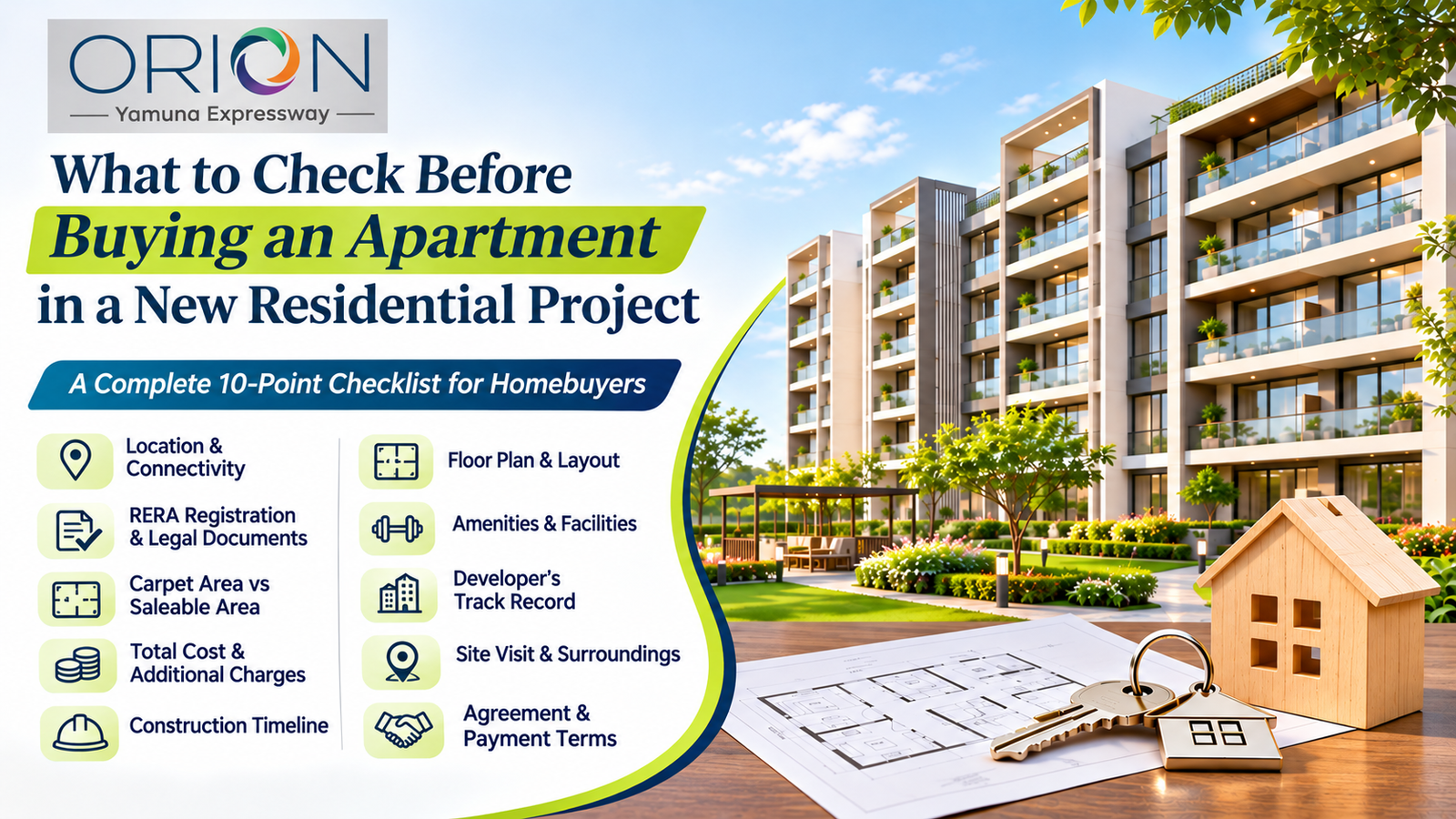
When it comes to buying an apartment, the price, location, and attractive property pictures are not the only things you should consider. Buyers who are planning to invest in or purchase a home need to understand the important aspects of a residential project before making a decision.
New residential projects offer modern designs, lifestyle facilities, and different types of apartments. However, every project has its own specifications, payment process, construction timeline, and legal requirements.
With proper planning, homebuyers can compare available options, understand potential concerns, and choose a home that matches their expectations.
1. Review the Location and Surrounding Infrastructure
One of the most important things to consider when buying a residential apartment is its location. A well-connected neighborhood can make everyday living more convenient and provide easy access to essential facilities.
Before making a decision, consider the distance from schools, hospitals, workplaces, shopping areas, and major roads. It is also important to check the existing infrastructure in the area rather than depending only on future development plans.
For example, if a buyer is considering buying 3 BHK flats on Yamuna Expressway, they should check the existing road connectivity, nearby schools, hospitals, and other facilities. Future development plans can also be considered, but buyers should understand what is already available.
Visiting the neighborhood at different times of the day can help you understand traffic conditions, accessibility, and the overall environment.
2. Check RERA Registration and Project Documentation
Legal verification is an important part of the apartment-buying process.
Under the Real Estate (Regulation and Development) Act, applicable residential projects are required to follow registration and disclosure requirements. Buyers should check the project details through the relevant state RERA authority.
Some important details to review include
- RERA registration number and current project status
- Information about the promoter and developer
- Approved building plans and specifications
- Registered project completion timelines
- Required approvals and other project documents
For residential projects in Uttar Pradesh, buyers can check the official UP-RERA website to find relevant project information.
Although RERA registration provides access to important project details, it should not replace independent legal verification. Consulting a legal professional can help buyers understand the documents and identify potential concerns.
3. Understand Carpet Area and Saleable Area
First-time homebuyers may get confused by the different ways apartment sizes are presented.
The carpet area of an apartment generally refers to the net usable floor area, as defined under the applicable RERA provisions. It helps buyers understand how much usable space is available inside the apartment.
Saleable area is another commonly used measurement in property advertisements. Depending on the calculation method used by the developer, it may include an allocation of common areas.
For example, two apartments advertised with similar saleable areas may have different usable spaces.
Before making a decision, ask the developer for a complete area statement. Compare the carpet area, room dimensions, balcony area, and overall apartment layout.
Understanding these measurements before purchasing can help you decide whether the available space is suitable for your family’s requirements.
4. Compare Floor Plans and Apartment Layouts
A properly planned floor layout can make everyday living more comfortable and convenient.
Instead of focusing only on the number of bedrooms, buyers should also check how the available space is distributed throughout the apartment.
Consider the placement of bedrooms, living rooms, bathrooms, balconies, and kitchens. Natural daylight, ventilation, storage space, and privacy are also important factors.
Families may prefer apartments with separate dining areas, spacious bedrooms, or an additional utility or service room.
If you are considering different apartment configurations, compare multiple floor plans to understand which layout makes the best use of the available space.
5. Calculate the Total Cost of Buying an Apartment
The basic selling price mentioned in a property advertisement may not always be the final amount you need to pay.
Depending on the project and applicable regulations, additional expenses may include:
- Parking charges
- Preferential location charges
- Maintenance deposits
- Utility-related charges
- Applicable government taxes
- Stamp duty and registration fees
Buyers should ask for a detailed, apartment-specific cost sheet that clearly mentions all applicable charges.
It is also important to understand the payment schedule, booking conditions, cancellation terms, and financial obligations during the construction period.
Comparing the complete cost of different apartments can help you avoid unexpected expenses and plan your budget more effectively.
6. Check the Amenities and Their Practical Benefits
Many new residential projects offer facilities such as swimming pools, fitness centers, landscaped gardens, children’s play areas, clubhouses, and recreational spaces.
These facilities can make everyday living more convenient, but buyers should check their actual specifications and how useful they will be for residents.
Some important things to consider include whether the amenities are part of the approved project plans, whether additional membership charges apply, and how future maintenance expenses will be managed.
Families with children may find outdoor spaces and recreational facilities particularly useful.
However, buyers should not consider proposed amenities as completed facilities until their construction and operational status have been verified.
7. Evaluate the Developer and Construction Timeline
Before purchasing an apartment, it is important to understand the developer’s background and ability to complete the project.
Buyers should review the developer’s previous projects, experience, completed developments, and publicly available project records.
If the apartment is under construction, check the registered completion date and the possession conditions mentioned in the agreement.
It is also worth understanding the construction-linked payment schedule, possible delays, and the provisions available under the agreement and applicable laws if the project does not progress as expected.
Do not make a purchase decision based only on promotional possession estimates. Written agreements and official project documents are more reliable sources of information.
8. Visit the Project Site Before Booking
A physical visit to the residential project can provide information that may not be available in brochures or online presentations.
During your visit, check the approach roads, surrounding development, site accessibility, and visible construction activities.
You can also ask the project representative about tower locations, apartment orientation, parking arrangements, and planned common facilities.
Before requesting detailed plans, pricing, or a site visit, buyers researching apartments in the DXN Orion Sector 22D project can start by reviewing the available apartment layouts and information in the project brochure.
A site visit can help you understand the project better, but it should not replace proper document verification.
9. Consider Your Long-Term Lifestyle Requirements
An apartment should meet not only your current requirements but also your possible future needs.
As families grow, they may need additional rooms, a separate workspace, or more storage. Convenient access to lifts and practical building layouts can also be important for senior family members.
Other factors worth considering include neighborhood development, expected maintenance expenses, and the availability of essential services.
If you are purchasing an apartment for investment purposes, check rental demand and resale potential through independent market research. Future infrastructure development does not automatically guarantee an increase in property value.
The right apartment should balance your budget, lifestyle, family requirements, and long-term plans.
10. Read the Agreement Carefully Before Making Payment
Before finalizing an apartment, take enough time to review the booking application, allotment terms, and agreement for sale.
Make sure you understand the following details:
- Apartment identification and carpet area
- Total purchase price and applicable charges
- Payment schedule and construction milestones
- Possession conditions and timelines
- Cancellation terms
- Responsibilities of both the buyer and developer
Keep copies of official communication, payment receipts, approved plans, and written commitments.
If you find any contractual terms difficult to understand, consider consulting an independent legal professional before signing the agreement.
A properly documented purchase process can reduce misunderstandings and help protect the buyer’s interests.
Conclusion
Buying an apartment in a new residential project requires careful consideration of several factors, including location, legal documentation, available space, amenities, overall cost, and construction commitments.
Although attractive offers and modern facilities may influence your decision, homebuyers should always evaluate the available information and understand whether the apartment matches their lifestyle and financial plans.
Following a proper apartment-buying checklist can make the decision-making process easier and help buyers select a suitable home with greater confidence.
Frequently Asked Questions (FAQs)
What should I consider first when purchasing an apartment?
Start by checking the location, overall budget, RERA registration, developer information, and available floor plans. These factors can help you understand whether the residential project meets your basic requirements.
Why is carpet area important when buying a flat?
Carpet area helps buyers understand the usable internal space available in an apartment. Comparing carpet areas provides a better understanding of actual living space than relying only on advertised saleable areas.
Is RERA registration required for every residential project?
Projects covered by the applicable provisions of RERA are required to be registered, subject to statutory exemptions. Buyers should verify the project’s registration status through the relevant state RERA website.
What additional costs should I consider when buying an apartment?
Depending on the project, additional expenses may include parking charges, maintenance deposits, preferential location charges, stamp duty, registration fees, applicable taxes, and utility-related charges. Always request a detailed cost sheet before booking.
Which is better, a 3 BHK or a 4 BHK apartment?
The decision depends on your family size, budget, space requirements, and long-term plans. A 3 BHK apartment may be suitable for many families, while a 4 BHK apartment can provide additional flexibility for larger households or people who need a separate workspace.
How can I verify the possession timeline of an under-construction apartment?
Buyers should check the registered completion timeline on the relevant RERA website and carefully review the possession conditions in the agreement for sale. Promotional possession estimates should always be independently verified.
You might also find these blog posts interesting:
What Are Low-Density Apartments and Why Do Families Prefer Them?
Living in Sector 22D Yamuna Expressway: A Practical Guide for Apartment Buyers
3 BHK vs 4 BHK Apartments: Which Is Better for Your Family?